Why Cloudflare Failed: Full Impact on X, ChatGPT and Major Websites
On November 18, 2025, a huge chunk of the internet suddenly stopped working. The source of the problem was a major technical failure at Cloudflare, the company often called “the biggest company you’ve never heard of.”
This global outage was a harsh wake-up call, showing how fragile our digital world is when one company, acting as an essential “gatekeeper,” goes down.
Best Tools for Job Seekers in 2026
The Problem: When the Digital Shield Fails
Cloudflare is a vital part of the internet’s hidden infrastructure. Its main job is simple: to make websites fast and keep them safe. The company provides services to about a fifth of all global websites.
- Speed Booster: Cloudflare is a content delivery system that helps websites load instantly.
- Security Shield: It protects sites from massive digital attacks, like DDoS attacks, where hackers try to flood a website with fake data to crash it.
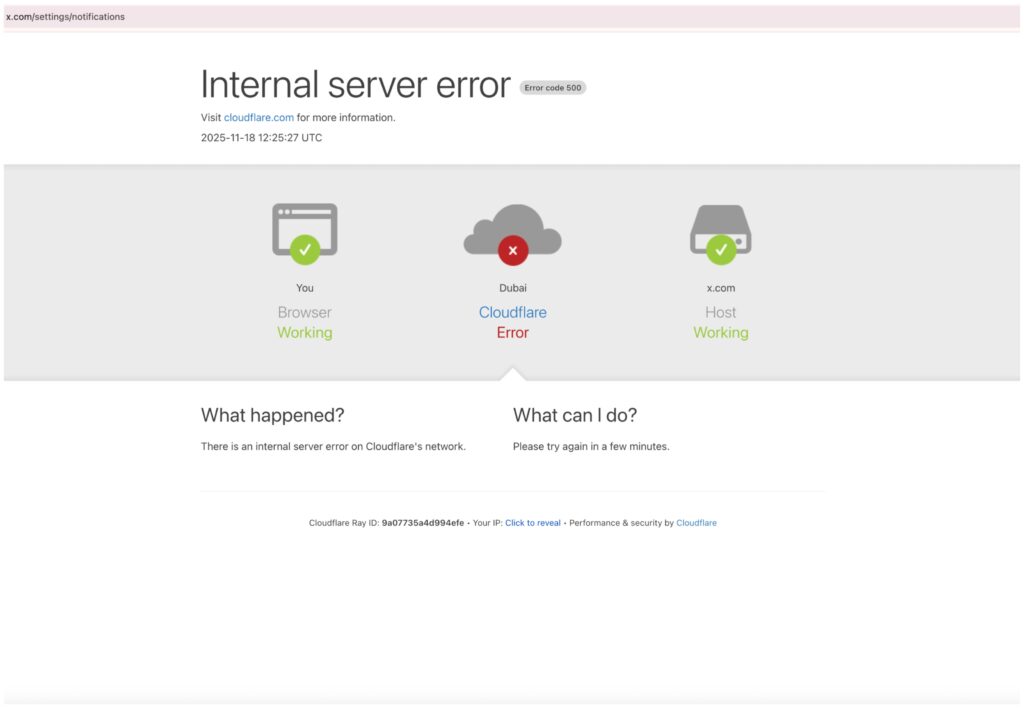
When the company experienced an “internal service degradation,” this digital shield failed. Cloudflare later noted they saw a “spike in unusual traffic” on one of their services, though the exact cause was unclear at the time. The failure was so bad that it disrupted Cloudflare’s own support tools and APIs.

Impacts Major Websites and Services
The outage sent a ripple effect across all sectors of the internet. Millions of users saw confusing “server error” messages instead of their favorite sites. Among the hardest-hit were:
- Social Media: X (formerly Twitter) saw major access problems.
- Artificial Intelligence: Top platforms like ChatGPT (OpenAI), Gemini, and Perplexity were hit, frustrating users who rely on these tools.
- Entertainment & Gaming: Services like Spotify, the film site Letterboxd, and major games like League of Legends all went offline for many users.
- Business Impact: The disruption was so severe that Cloudflare’s stock was down more than 3% in premarket trading.
The Ultimate Irony
To highlight the immense scale of the failure, the problem even reached the tools built to track it. The popular outage tracking site, Downdetector, was temporarily disabled itself.
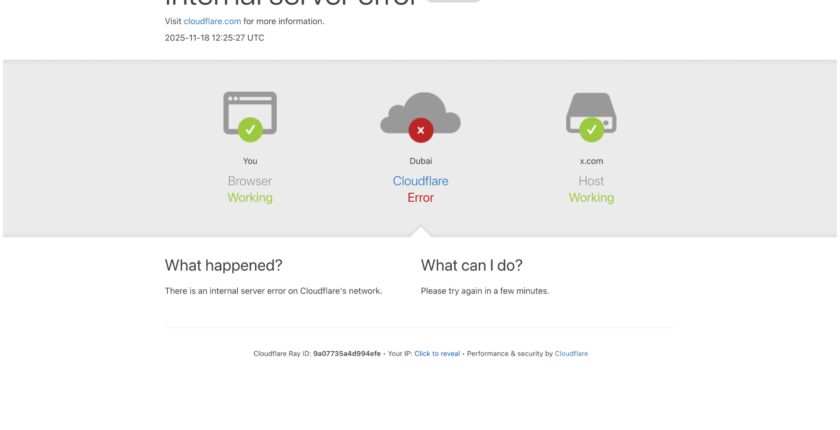
The message users saw often pointed directly to an “internal server error on Cloudflare’s network,” proving that the “checker” was broken because it also relied on the system that was crashing.
The Lesson Learned
This outage came less than a month after a similar widespread failure at Amazon Web Services (AWS). Experts quickly pointed to a critical issue: our internet relies too much on a small group of infrastructure providers.
The Cloudflare crash serves as a clear warning: when these central digital companies face a technical issue, the disruption doesn’t just affect one site it creates a cascading, global chaos that reminds everyone that even the most powerful parts of the internet can fail quickly.