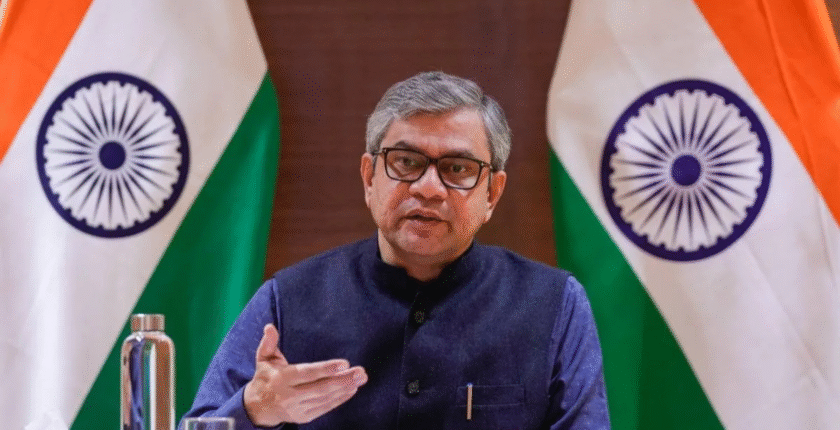
IT Minister Ashwini Vaishnaws Warning to Meta & YouTube: “Take Responsibility of Your Content”
- India’s digital world is growing super fast, but with that the problems are also growing. Recently, IT Minister Ashwini Vaishnaw gave a strong warning to social media giants like Meta, YouTube, and many other platforms. His message was simple but very serious — you must take responsibility of the content that appears on your platform.
- This statement is not just a random comment. It is connected to a much bigger conversation happening right now in India about deepfakes, fake news, harmful content, and how social media is affecting society.
Why Did Vaishnaw Give This Warning?
1. Deepfake Videos Are Creating Big Confusion
- Deepfake technology has become too easy to use. Anyone can create a fake video of a celebrity or politician, and millions of people believe it without checking.
- Vaishnaw said this kind of content is dangerous and platforms must detect it faster.
2. Safe Harbour Rule Might Change
- Right now, big social platforms are protected under something called safe harbour.
- Basically, it means they are not responsible for what users upload.
- But Vaishnaw said if platforms don’t control harmful content, this protection cannot stay forever.
- This is a huge shift and can change how platforms operate in India.
3. India Wants a “Techno-Legal” Model
- Instead of copying rules from other countries, India wants a new framework that is simple, fair, and fits Indian society.
- Vaishnaw said rules must be flexible but also strong enough to stop harmful content.
4. Content Must Respect Indian Culture
- The minister said that many platforms don’t understand Indian social values.
- So their moderation systems sometimes fail.
- He wants companies to moderate content in a way that respects local languages, culture, and laws.
5. Algorithms Are Promoting Wrong Things
- Another issue he raised is algorithms.
- Platforms push content that gets more views, even if it is misleading, vulgar or harmful.
- This creates a very unhealthy online environment.
6. Vulgar Content on OTT & Social Media
- Vaishnaw also mentioned that vulgar or abusive content is becoming common, which he wants to control with stricter rules.
What Can Happen Next?
1. Stricter Content Moderation Rules
- Platforms may have to use better AI tools, hire more local moderators, and remove content faster.
2. Possible Removal of Safe Harbour
- If safe harbour is changed, platforms will become legally responsible for harmful or fake content.
3. New Law for Social Media
- India might release a new digital law that guides how companies must handle misinformation, deepfakes, and illegal content.
4. Impact on Free Speech
- Some people worry that stricter rules might limit freedom of speech.
- So the government needs to maintain balance.
5. Increase in Trust
- If harmful content reduces, people might trust online information more.
What Is the Main Purpose of These Warnings?
Here’s the core idea behind Vaishnaw’s approach:
- Protect democracy from misinformation
- Save society from harmful or vulgar content
- Keep innovation alive while ensuring safety
- Push big tech companies to act responsibly
- Build a digital environment that respects India’s culture and law
Are There Any Risks?
Yes, there are some concerns:
- Rules might become too strict
- Platforms may remove content even if it’s not harmful (to avoid trouble)
- Smaller startups may find it hard to follow heavy compliance rules
- Detecting deepfakes is still technically difficult