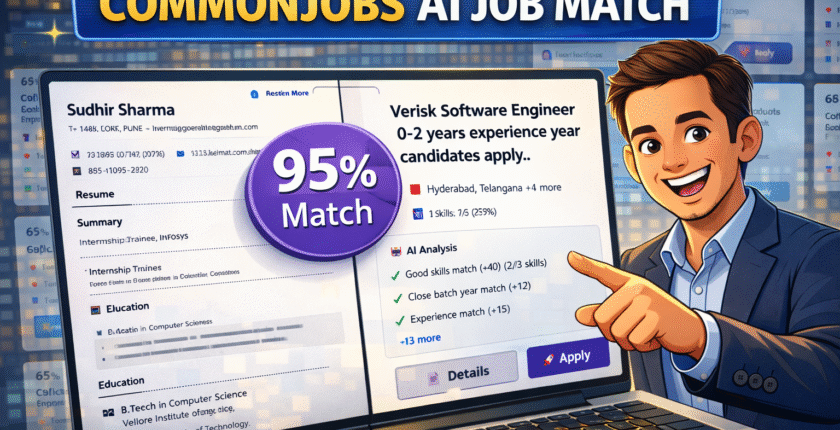
Commonjobs AI job match : How Commonjobs Shows Only the Most Relevant Jobs for Your Profile
Commonjobs AI job match : Scrolling through hundreds of pointless job postings is one of the major annoyances for job hunters. Both inexperienced and seasoned applicants waste time applying to positions that don’t fit their qualifications, experience, desired location, or expected income. The outcome? Reduced confidence, low response rates, and frequent rejections.
In 2026, job searching ought to be strategic rather than haphazard. That is precisely the reason Commonjobs’ AI Job Match tool was created. The site selectively filters and suggests jobs that match a candidate’s profile information, rather than listing every position that is advertised.
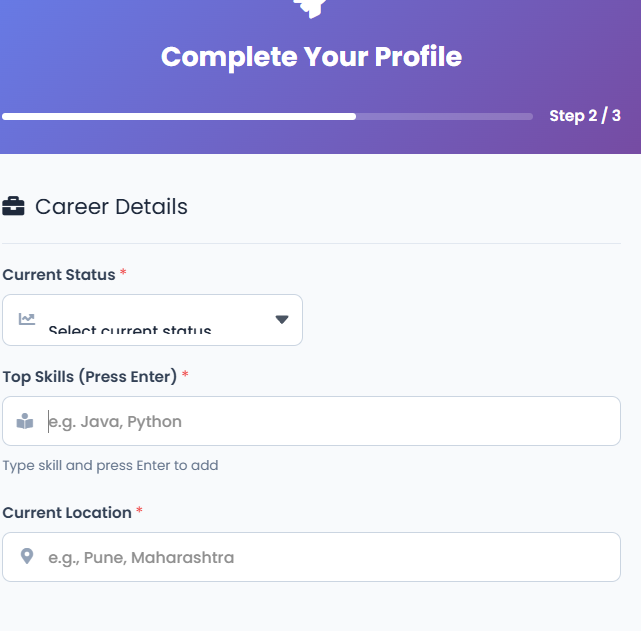
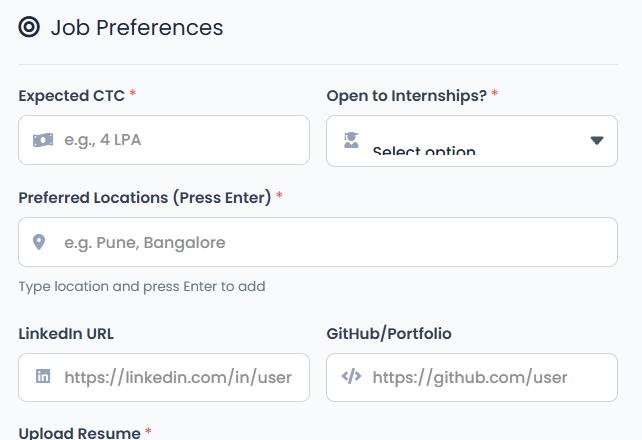
Candidates are directed to a customized “Your Match” section after the AI engine evaluates the information they provide when they register for an account on Commonjobs and appropriately fill in fields like skills, pass-out year, experience level, preferred location, and salary expectations. This ensures smarter applications, higher response rates, and better conversion chances.
1. Personalized Job Recommendations Based on Skills
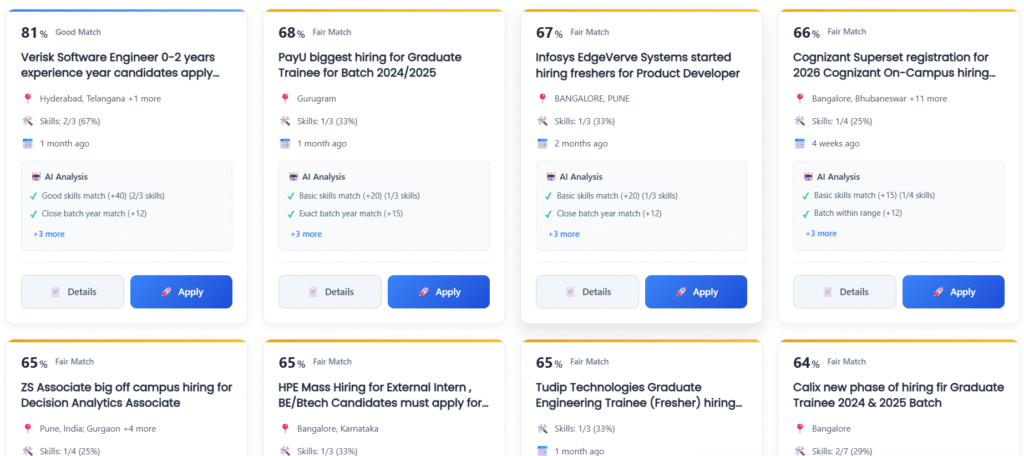
When it comes to hiring, skills are the most important consideration. Many job seekers apply without verifying that their qualifications match the job description. Low shortlist probability results from this.
The AI Job Match function assesses a candidate’s talents and contrasts them with what the employer needs. It determines the percentage of matches and only shows jobs with significant alignment. The probability of passing resume screening rounds is increased by this focused filtering.
Candidates can concentrate on 10 highly relevant chances rather than applying to 100 irrelevant positions. This increases confidence and efficiency.
2. Batch Year and Experience-Based Filtering
Recruiters frequently outline requirements for eligibility, such as the year of graduation or the range of experience needed. Typically, candidates that fall outside of this range are instantly dismissed.
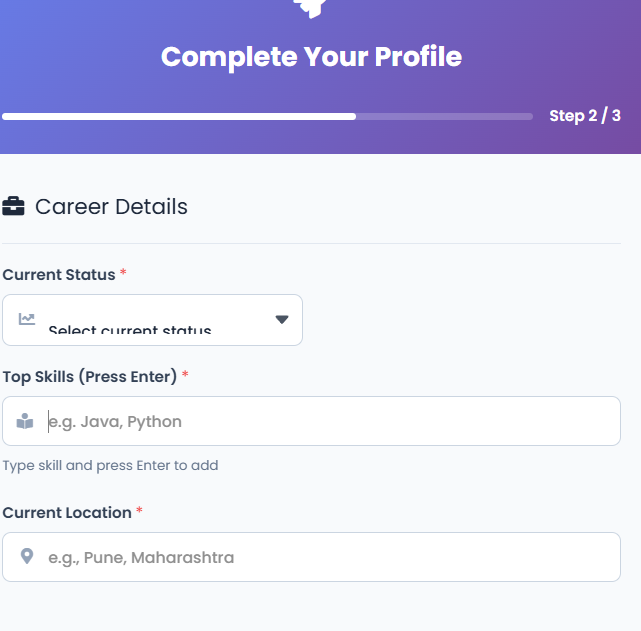
When creating a candidate’s profile, the AI Job Match algorithm takes their professional experience and year of graduation into account. Jobs that meet those criteria are subsequently filtered.
For instance, the AI will emphasize positions that are only available to candidates from the 2024 or 2025 batches. In a similar vein, seasoned applicants view positions that complement their prior experience rather than entry-level positions.
This raises the likelihood of selection and decreases pointless applications.
3. Location Preference Optimization
When choosing a job, location is crucial. Because of their families, the expense of living, or their professional objectives, many candidates have city preferences.
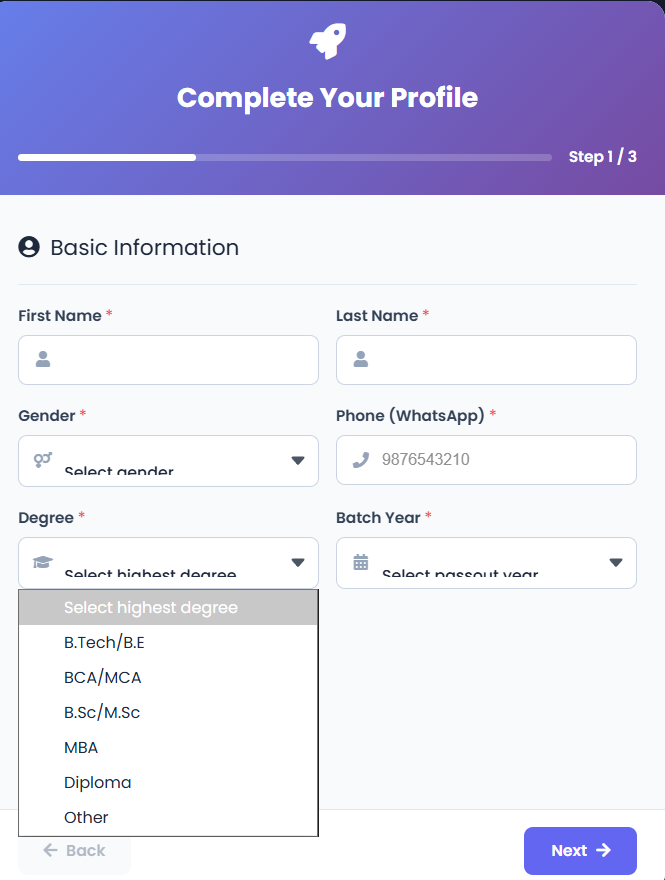
The AI engine emphasizes positions in the cities that candidates indicate as their preferred job locations when they create their profiles. The job feed becomes location-specific, whether it is in Bangalore, Hyderabad, Pune, or Gurugram.
Candidates won’t waste time applying for employment in places they wouldn’t want to go to thanks to this. It makes the employment search more targeted and practical.
4. Salary Expectation Alignment
One of the most frequent causes of offer rejections is salary discrepancy. Applicants may submit applications for jobs that fall short of their expectations or that are outside the employer’s financial means.
The wage expectations specified during account setup are taken into account by the AI Job Match tool. It matches the job packages that recruiters have mentioned with these expectations.
This keeps the job targeting realistic. The hiring process goes more smoothly when candidates see positions that fit both their projected salary range and skill level.
5. Match Percentage Transparency
The visual match % shown for each job is one of the AI Job Match section’s most potent features.
Candidates can check whether their profile meets 60%, 70%, or 80% of the job requirements rather than assuming it is appropriate. Making wiser decisions is made possible by this transparency.
Roles with a higher match % ought to be given priority. This data-driven strategy decreases blind applications and raises the likelihood of shortlisting.
6. Reduced Application Fatigue
Burnout results from applying to dozens of meaningless jobs. Confidence and motivation are damaged by repeated, unclear rejections.
AI-based screening ensures that candidates only engage with opportunities that are pertinent to them. Instead of being tiresome, the application process becomes purposeful and efficient.
During the job search, this methodical technique enhances mental focus, conserves energy, and saves time.
Free Resume Checker & Resume Optimizer: 90% Freshers Make This Resume Mistake
7. Better Recruiter Alignment and Faster Responses
Candidates who closely fit the job requirements are preferred by recruiters. Response rates rise dramatically when applications are more aligned.
Recruiters are more likely to give applications significant consideration because the AI Job Match system pre-filters applicants based on eligibility.
As a result, recruiters obtain better applications and prospects apply strategically, creating a win-win situation.
Why Accurate Profile Information Matters
The data that candidates supply when creating their accounts is all that the AI engine uses. Accurate entry is required for skills, experience, pass-out year, preferred location, and pay expectations.
Match quality is decreased by inaccurate or incomplete information. The AI recommendations are more intelligent when the profile is more accurate.
Candidates have a major edge in the job search process if they take the time to finish their profile completely.
How the AI Job Match Section Works
After profile completion, candidates are redirected to the “Your Match” section on the Commonjobs platform. This section displays job cards with:
• Match percentage
• Skill compatibility analysis
• Batch alignment
• Experience match
• Location suitability
Each listing is curated based on profile data rather than generic job listings.
This personalized dashboard transforms job searching from manual browsing into intelligent targeting.
Benefits of AI Job Match in 2026 Hiring Landscape
Businesses utilize automated screening techniques in today’s cutthroat economy. Priority is given to applicants who closely match the job requirements.
Recruiter screening mechanism is mirrored in the AI Job Match service. It improves compatibility even before the application is submitted by displaying only related jobs.
This increases the likelihood of selection and enhances overall hiring efficiency.
Conclusion
The old-fashioned way of looking for a job, which involves endless browsing and applying at random, is no longer effective. Data-driven targeting, filtering, and customisation are necessary for intelligent job searching.
Candidates will only see positions that match their abilities, batch year, experience, preferred location, and expected compensation with to Commonjobs’ AI Job Match tool.
Candidates go from applying at random to strategically advancing their careers by accurately filling out their profiles and using the “Your Match” feature.
Astute applicants won’t apply anywhere in 2026. Where they really fit, they will apply.