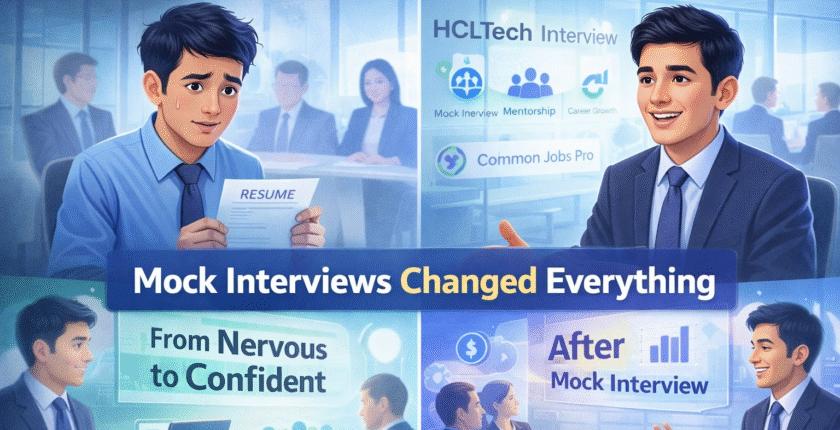
Why Mock Interviews Are a Game-Changer for Freshers: How a Common Jobs Pro Candidate Cracked His Interview
Why Mock Interviews Are a Game-Changer for Freshers: Many job searchers, particularly recent graduates, undervalue the actual effectiveness of practice interviews. “It’s just a practice interview, how much difference can it really make?” is a common thought. Thousands of competent applicants enter actual interviews unprepared as a result of this mindset—not because they lack skills, but rather because they lack confidence, clarity, and interview readiness. Ignoring mock interviews can be an expensive error in today’s competitive employment market, where even one pause can cost you an opportunity.
In actuality, interviews cover more ground than just technical expertise. They assess a candidate’s communication skills, self-assurance, approach to problem-solving, and ability to perform well under duress. Many candidates are aware of the solutions, but they are unable to articulate them clearly. Mock interviews are crucial in bridging this knowledge-performance gap.
One of our Common Jobs Pro candidates who received an interview call from HCLTech recently gave us a heartfelt call. He personally expressed gratitude to us for doing a separate practice interview prior to his real interview. His confidence to confront an actual interviewer was bolstered by that one session, which also clarified his strategy. His story demonstrates why mock interviews are an effective instrument for success rather than “just practice.”
The Biggest Mistake Candidates Make: Ignoring Mock Interviews
One of the most common mistakes freshers make is assuming that interviews will be easy if they know the syllabus or technical concepts. They spend weeks studying but almost no time practicing how to speak, explain, and respond under interview pressure. When the real interview happens, nervousness takes over—hands shake, answers become unclear, and confidence drops instantly.
Mock interviews simulate real interview pressure in a safe environment. They expose candidates to real questions, time constraints, and follow-up probing. By skipping mock interviews, candidates walk into interviews blind, unaware of how interviewers think or how their own responses sound. This is why many interviews fail not due to lack of skills, but due to lack of preparation.
How Mock Interviews Build Interview Confidence
Confidence cannot be memorized—it must be practiced. Mock interviews allow candidates to experience mistakes without consequences. When candidates answer incorrectly or struggle during a mock session, they receive constructive feedback instead of rejection. This process slowly removes fear and replaces it with confidence.
In the case of our Common Jobs Pro candidate, the mock interview helped him understand that his nervousness was normal. Through guided practice, he learned how to pause, structure answers, and communicate clearly. When the real HCLTech interview came, it no longer felt unfamiliar—he had already “been there” mentally.
Understanding Real Interview Expectations
Many freshers don’t realize how interviews actually work. They expect only textbook questions, but interviewers often focus on:
- How you explain concepts
- How you approach problems
- How confident and clear you sound
- How you handle follow-up questions
Mock interviews reveal these expectations early. Candidates learn that interviewers value clarity over complexity and logic over memorization. This shift in mindset dramatically improves interview performance.
Our Pro candidate mentioned that the mock interview helped him understand how interviewers think, not just what they ask. This understanding reduced fear and improved his response quality during the actual interview.
Boosting Morale Before the Actual Interview
Morale plays a huge role in interview success. A confident candidate performs better even with average skills, while a nervous candidate underperforms despite strong knowledge. Mock interviews act as a confidence booster just before the real interview.
In this case, we conducted a dedicated mock interview session after the HCLTech interview call. The candidate felt supported, guided, and motivated. That emotional support made a significant difference. Instead of panic, he felt prepared. Instead of fear, he felt focused.
Identifying and Fixing Weak Areas
Mock interviews are not about judging candidates—they are about improving them. During these sessions, mentors identify weak areas such as:
- Poor communication
- Lack of structure in answers
- Overuse of filler words
- Weak HR answers
- Technical gaps
Once identified, these issues can be fixed quickly. Our candidate learned how to frame answers using simple structures and avoid common mistakes. This targeted improvement is nearly impossible without mock interviews.
How Common Jobs Pro Mock Interviews Are Different
At Common Jobs, mock interviews are not generic or scripted. They are tailored to the candidate’s role, experience level, and target company. Interviewers act like real recruiters, asking practical and role-specific questions.
In this case, the mock interview was aligned with HCLTech interview patterns, which made the preparation highly relevant. This realism helped the candidate feel comfortable during the actual interview, as the experience felt familiar.
The Psychological Advantage of Practice
Repeated exposure reduces fear. This is a psychological fact. Mock interviews train the brain to treat interviews as routine conversations instead of high-pressure events. When the brain feels familiar with a situation, anxiety automatically drops.
Our candidate mentioned that during the actual interview, he felt calm because his brain recognized the situation from mock practice. This mental advantage is often the difference between rejection and selection.
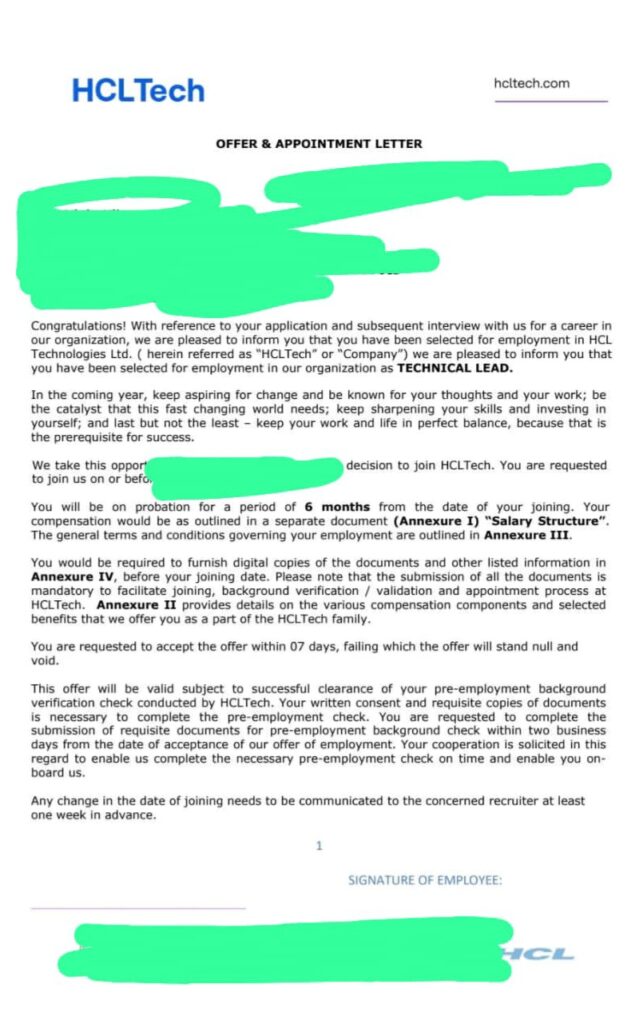
How CommonJobs Pro Plan Is Helping Students Get Placed: Real Offer Letters, Real Confidence, Real Careers
Why Freshers Benefit the Most from Mock Interviews
Freshers lack real interview experience. They may be skilled, but they don’t know how interviews unfold in reality. Mock interviews act as a bridge between academic knowledge and corporate expectations.
For freshers, mock interviews are not optional—they are essential. They teach professionalism, communication, confidence, and clarity, all of which are critical for cracking interviews at companies like HCLTech.
How Mock Interviews Complement Referral Jobs and AI Courses
In the Common Jobs Pro plan, mock interviews work alongside Referral Jobs and the AI Course. Referrals help candidates get interview calls, AI skills improve technical strength, and mock interviews ensure candidates convert opportunities into offers.
Our candidate already had the interview call through referrals—but mock interviews ensured he was mentally and technically ready to face it successfully. This combination creates real results, not just opportunities.
Final Thoughts: Mock Interviews Are Not Optional Anymore
Mock interviews are no longer a “nice to have”—they are a necessity. In a competitive job market, preparation decides outcomes. Candidates who practice interviews perform better, communicate clearly, and stand out from the crowd.
The experience of our Common Jobs Pro candidate proves one thing clearly: mock interviews boost confidence, improve clarity, and increase interview success rates. If you want real results, don’t ignore mock interviews. Practice, prepare, and perform—because opportunities favor the prepared.