Your Resume Is not just behind It is Invisible: How ATS Is Quietly Rejecting You in 2025
Your Resume Is not just behind It is Invisible: In the era of Application Tracking Systems (ATS), most job seekers are unknowingly fighting the wrong battle. They spend hours perfecting resume designs, adding graphics, icons, and creative layouts, believing that an attractive resume will impress recruiters. Unfortunately, the harsh truth is this: before your resume ever reaches a human, it is scanned, filtered, and ranked by software. If your resume is not optimized for ATS, it does not get rejected loudly—it simply becomes invisible.
This is why thousands of qualified candidates receive no interview calls despite having the right skills and experience. The problem is not a lack of talent; it is the use of outdated resume practices in a technology-driven hiring ecosystem. In 2025, your resume must speak the language of machines before it speaks to humans. Understanding how ATS works—and adapting your resume accordingly—is no longer optional; it is essential.
What Is ATS and Why It Controls Your Job Opportunities
An Application Tracking System is not artificial intelligence judging your potential or personality. It is a structured database and matching engine designed to filter resumes efficiently. ATS software parses resumes into plain text, categorizes information under predefined headings, and compares it against job descriptions to calculate relevance scores.
Recruiters rely heavily on ATS because of application volume. A single job posting can attract hundreds or even thousands of resumes. ATS reduces this pool by ranking candidates based on predefined criteria. If your resume does not meet those criteria, it never reaches a recruiter’s screen—regardless of your qualifications.
How ATS Reads Your Resume: Parsing Comes First
The first thing ATS does is parse your resume. Parsing means converting your resume file into plain, machine-readable text. During this process, complex formatting elements often break the structure of your resume, causing critical information to be misplaced or ignored entirely.
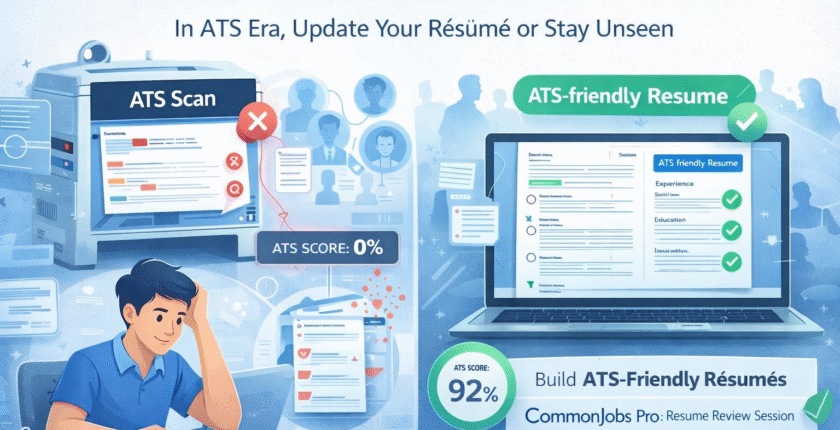
Elements such as tables, multi-column layouts, icons, graphics, headers, footers, and decorative fonts confuse ATS systems. When parsing fails, your skills, experience, or education may not be recognized correctly. In many cases, the system assigns a score of zero—not because you are unqualified, but because the software could not read your resume properly.
How ATS Reads Your Resume : read in brief
Why Simple Formatting Beats Creative Design
ATS systems are designed for efficiency, not aesthetics. A single-column layout with standard section headings such as “Work Experience,” “Skills,” and “Education” ensures accurate parsing. Simple fonts like Calibri, Arial, or Times New Roman improve readability for both machines and humans.
While creative resumes may look impressive on social media or portfolios, they are risky for online job applications. In ATS-driven hiring, clarity beats creativity. A clean, structured resume ensures that your information is captured, categorized, and evaluated correctly.
Keyword Matching: The Core of ATS Scoring (70–80%)
Keyword matching is the most critical factor in ATS evaluation. The system compares your resume with the job description line by line, looking for exact matches of skills, tools, technologies, and role-specific terms. This process often accounts for 70–80% of your ATS score.
For example, if a job description mentions “SQL, Power BI, and stakeholder reporting” but your resume says “worked with databases and reports,” the ATS sees no match. Even though the skills may be similar, the wording is not. ATS does not infer meaning; it matches text.
How to Use Keywords Without Stuffing
Effective keyword optimization does not mean copying and pasting the entire job description into your resume. Keyword stuffing can reduce readability and raise red flags. Instead, keywords should be integrated naturally into your skills section, experience bullets, and project descriptions.
The best approach is to analyze the job description, identify recurring terms, and incorporate them truthfully. If you genuinely have the skill, use the exact terminology used by the employer. This alignment significantly improves your relevance score without compromising authenticity.
ATS Doesn’t Reject You — It Ranks You
One of the biggest misconceptions is that ATS automatically rejects candidates. In reality, ATS ranks resumes based on relevance. You are competing against other applicants, not an absolute pass-or-fail system.
For instance, you may be ranked #47 out of 300 applicants. Recruiters typically review only the top 10–15 resumes. This means you were not rejected for being unqualified—you were simply outranked. Small improvements in keyword alignment, formatting, and relevance can push your resume into the visible range.
Factors That Influence ATS Ranking
Several factors influence your ranking beyond keywords. These include job title similarity, recency of experience, years of experience alignment, and the presence of required certifications or tools. ATS favors candidates whose resumes closely mirror the structure and expectations of the job description.
This is why using a single generic resume for all applications is ineffective. Each role prioritizes different skills and experiences. Tailoring your resume ensures higher relevance and better ranking for each application.
Common ATS Mistakes That Make Your Resume Invisible
Many candidates unknowingly sabotage their resumes with avoidable mistakes. Creative section headings like “My Journey” instead of “Experience,” missing core keywords, and vague descriptions reduce ATS effectiveness. File naming errors such as “Resume_Final_v3.pdf” also signal unprofessionalism.
Another critical mistake is focusing only on responsibilities instead of outcomes. ATS—and recruiters—value measurable results. Numbers, metrics, and achievements improve both machine ranking and human interest.
What Actually Works in an ATS-Driven Job Market
Successful candidates tailor their resumes for every role. They mirror job description keywords naturally, maintain a clear skills section, and quantify achievements wherever possible. Simple changes such as renaming sections correctly and adjusting wording can significantly improve ATS scores.
File naming also matters. A professional file name like “Manish_Panchal_Data_Analyst_Resume.pdf” improves credibility and organization. These details may seem minor, but in competitive hiring environments, they make a measurable difference.
ATS-Friendly Resumes Are the New Minimum Standard
In 2025, being qualified is not enough. Your resume must be ATS-qualified before it can be recruiter-approved. This shift has redefined resume writing as a technical skill, not just a writing task.
Understanding ATS mechanics empowers candidates to compete fairly. When your resume is structured correctly, optimized with relevant keywords, and tailored for each role, you significantly increase your chances of being seen, shortlisted, and interviewed.
How Common Jobs Pro Resume Review Sessions Fix ATS Rejection
One of the biggest advantages of the Common Jobs Pro program is its structured, expert-led ATS resume review session, designed specifically for today’s algorithm-driven hiring process. Instead of generic feedback, candidates receive a line-by-line evaluation of their resume against real job descriptions. Mentors identify critical ATS blockers such as incorrect section headings, keyword mismatches, formatting errors, and vague experience statements. Each resume is tested from an ATS perspective—ensuring it can be parsed correctly, scored competitively, and ranked higher for relevant roles.
What truly sets Common Jobs Pro apart is its role-based optimization approach. Candidates are guided on how to tailor resumes for different job profiles without rewriting everything from scratch. Mentors help map job description keywords to existing experience, rewrite bullet points with measurable impact, and structure skills sections that both ATS and recruiters value. As a result, candidates move from “invisible” resumes to interview-ready, ATS-compliant profiles, significantly improving shortlisting rates and restoring confidence in their job search.
Take resume review sessions Regularly : Click here
Conclusion: You’re Not Behind — You’re Just Unoptimized
If you are not getting interview calls, it does not mean you lack skills or potential. It means your resume is not aligned with how modern hiring systems work. ATS is not your enemy—it is a system you must learn to work with.
Your resume is your first algorithmic impression. Make it readable, relevant, and role-specific. Once your resume passes the machine, your skills and experience can finally speak to humans. In today’s job market, visibility is everything—and ATS optimization is the key to unlocking it.